
If you’ve been through a home inspection or even just started shopping for a house, you’ve probably heard radon mentioned at some point. It’s one of those things that sounds a little scary and a little mysterious, mostly because you can’t see, smell, or taste it. But understanding what radon is and how it affects homes is actually pretty simple. And most importantly, it’s something you can handle.
What Is Radon and Where Does It Come From?
Radon is a naturally occurring radioactive gas that comes from the breakdown of uranium in the soil, rock, and water underground. That might sound intense, but this process has been happening for millions of years. The problem is, when radon gets trapped inside homes, it can build up to levels that may be harmful over time.
This gas tends to move from the ground into the air, and it can seep into buildings through cracks in the foundation, openings around pipes, or even through sump pumps and crawl spaces. Once it’s inside and the house is sealed up tight—especially in colder months—radon levels can rise.
Why Is Radon Dangerous to Your Health?
The biggest concern with radon is health-related. Long-term exposure to high levels of radon is the second leading cause of lung cancer in the United States, right after smoking. According to the EPA, radon is responsible for about 21,000 lung cancer deaths per year.
Radon can be present in homes of any age, with or without basements, and has been found in homes across all 50 states, though some areas are more prone than others. So even if everything else in a house checks out perfectly, testing is still important.
How Does Radon Enter a Home?
Radon gets into homes through the ground below by working its way through:
- Cracks in concrete slabs or foundation walls
- Gaps around service pipes
- Crawl spaces or unfinished basements
- Floor drains or sump pump openings
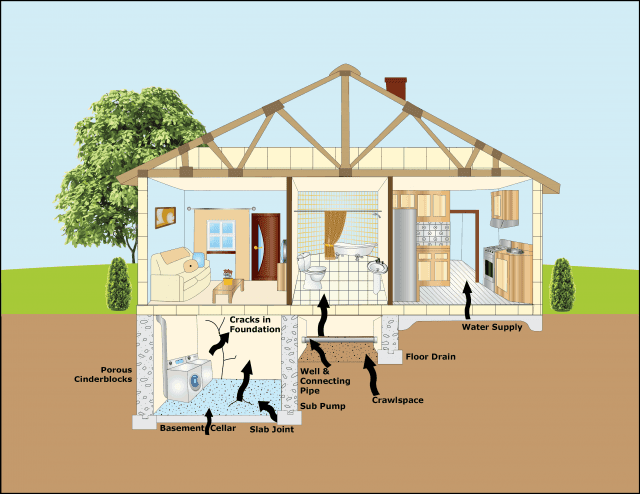
Photo courtesy of https://www.epa.gov/radiation/radionuclide-basics-radon
No house is totally immune. Even well-sealed or newer homes can have elevated levels.
How Do You Test for Radon?
Testing for radon is simple and affordable. You’ve got two main options:
- DIY Test Kits or Devices – Available online or at most hardware stores. You set the kit or device out for a few days, and it provides the readings. These are fine for general checks but not typically used during real estate transactions.
- Professional Testing – This is the go-to choice when buying or selling a home. A licensed radon tester sets up a monitor for 48 hours, usually during the inspection period.
In Northern Virginia, the typical cost for professional radon testing is approximately $165, though prices vary by region. Results come back fast and give you a clear reading of the home’s radon level.
The EPA recommends taking action if the level is 4.0 picocuries per liter (pCi/L) or higher.
What Happens If the Levels Are High?
The good news is that high radon levels are fixable. A radon mitigation system can usually be installed quickly and without tearing the house apart. The most common type is a sub-slab depressurization system. It involves:
- Sealing major entry points (like foundation cracks)
- Installing a pipe system that pulls radon from beneath the house
- Using a small fan to vent it safely outside
These systems are highly effective and designed for long-term use, with minimal maintenance. Once installed, they can usually keep radon levels well below the EPA’s action level, with no noticeable impact on daily living.
Final Thoughts
Radon is one of those invisible risks that’s easy to overlook, but it’s worth paying attention to. The good news is that it’s common, easy to test for, and simple to fix if needed. Whether you’re buying, selling, or staying put, a radon test is a smart move that could protect your health for years to come.
If you’re buying a home, experts recommend radon testing as part of your home inspection, especially if there is a basement or crawl space. It’s inexpensive peace of mind and could even be a bargaining chip if levels come back high.
Bottom line: radon shouldn’t scare you away from a home, but it shouldn’t be ignored either.
For more detailed information on radon health risks and national guidelines, visit the CDC’s radon resource page.