
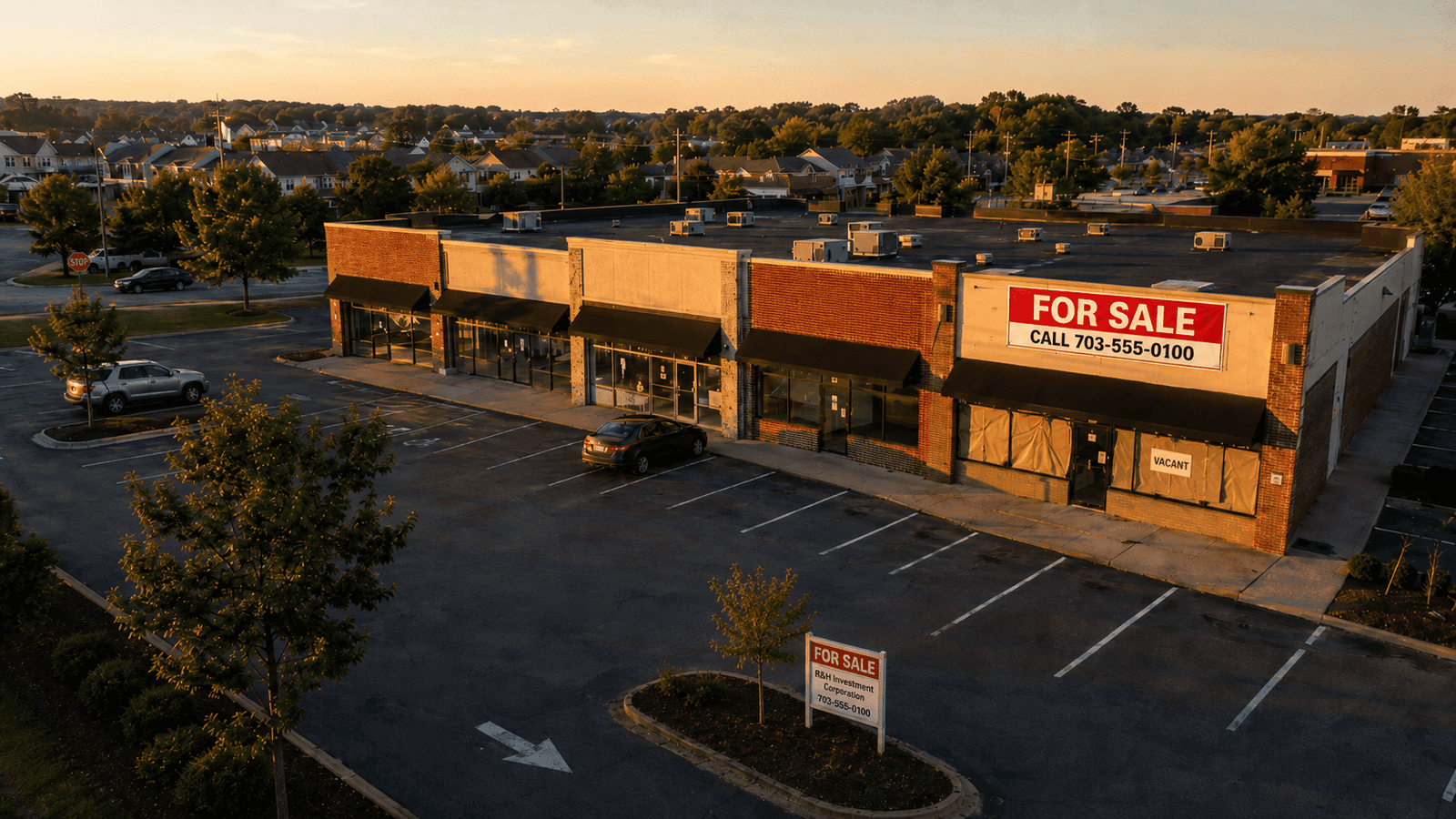
Buying a commercial property for the first time is a fundamentally different transaction from buying a home. The financing works differently, the valuation methods are different, the due diligence is longer and more technical, and the risks are different. For military families building long-term wealth through real estate, commercial properties can be powerful tools, but they reward preparation and punish shortcuts. This guide explains how commercial acquisitions work, how they compare to residential purchases, and what a first-time buyer should understand before making an offer.
How Commercial Real Estate Differs from Residential
The most important shift in mindset is this: commercial properties are valued based on the income they produce, not on what comparable buildings nearby sold for. A lender approving a commercial loan is evaluating whether the property generates enough cash flow to service its own debt. A residential lender is primarily evaluating your income and credit. That distinction shapes every other part of the transaction.
The comparison below captures the major structural differences between residential and commercial purchases:
| Category | Residential | Commercial |
| Down Payment | 3%–20% (VA: 0%) | 10%–30% depending on loan type |
| Loan Basis | Borrower income and credit | Property income (DSCR) plus borrower |
| Valuation Method | Comparable sales | Income capitalization (NOI / cap rate) |
| Loan Term | 15 or 30 years fixed | 5–25 years; often balloon at 10 |
| Interest Rates | Lower; federally standardized | Higher; lender-specific |
| Due Diligence Period | 7–21 days typical | 30–90 days typical |
| Lease Structure | Month-to-month or annual residential | Gross, modified gross, or NNN |
| Tenants | Individuals and families | Businesses; multi-year leases |
| Depreciation (IRS) | 27.5 years | 39 years |
Note: Rates, loan amounts, and program details change. Confirm current terms with a licensed commercial lender before making any financing decision.
Commercial Property Categories
Commercial real estate covers a wide range of asset types. Each generates income differently and carries different tenant, management, and risk profiles.
- Office: Office buildings house professional tenants on multi-year leases. Income is relatively stable when occupied, but vacancy can be prolonged if the local office market softens. Remote work trends have added risk to certain office sub-markets.
- Retail: Retail centers depend on consumer traffic. Triple-net leases are common with national tenants. Local and regional retailers carry higher credit risk than national chains with investment-grade credit ratings.
- Industrial and Warehouse: Industrial properties and warehouses are among the strongest-performing asset classes in recent years, driven by e-commerce demand. They typically attract long leases, low management intensity, and tenants who handle their own interior maintenance.
- Multifamily (5+ Units): Multifamily properties with five or more units are classified as commercial. They are often the entry point for investors moving from residential rentals into commercial real estate. Financing is available through conventional commercial lenders, Fannie Mae, Freddie Mac, and FHA programs.
- Mixed-Use: Mixed-use buildings combine retail, office, or residential uses in a single structure. They offer diversification within one asset but require managing multiple lease types and tenant relationships simultaneously.
- Medical Office: Medical offices cater to healthcare tenants who invest heavily in buildout and tend to sign long leases. Tenant credit quality is generally high. Demand is driven by population demographics rather than economic cycles.
- Self-Storage: Self-storage facilities generate income from individual unit rentals with month-to-month contracts. Operating expenses are typically low relative to income. They are less sensitive to economic downturns than some other commercial types.
How Commercial Properties Are Valued
Commercial property value is determined by income, not by what the neighbors sold for. Three metrics drive every commercial valuation:
Net Operating Income (NOI) is gross rental income minus all operating expenses, not including debt service or capital expenditures. Property taxes, insurance, management fees, maintenance, and utilities paid by the landlord all count against gross income to arrive at NOI. A property generating $120,000 per year in rent with $40,000 in operating expenses produces an NOI of $80,000.
Cap Rate (Capitalization Rate) is NOI divided by property value, expressed as a percentage. Using the example above, if that property sells for $1,000,000, the cap rate is 8%. Higher cap rates generally reflect higher risk or less desirable markets. Lower cap rates reflect safer assets in stronger markets. Cap rates vary significantly by asset class, location, and market conditions.
Note: Cap rate benchmarks shift with market conditions. Research current cap rates for your specific asset class and geographic market before underwriting any deal.
Debt Service Coverage Ratio (DSCR) measures whether the property generates enough income to cover its loan payments. It is calculated by dividing NOI by annual debt service. Most commercial lenders require a minimum DSCR of 1.25, meaning the property must generate 25% more income than its debt payments. A property with $80,000 NOI and $60,000 in annual debt service has a DSCR of 1.33, which typically satisfies lender requirements.
These three metrics work together. A property with strong NOI, a cap rate aligned with market expectations, and a DSCR above 1.25 is positioned to attract financing. A property with thin margins or high vacancy will struggle on all three.
Financing Your First Commercial Property
Commercial financing is more complex than residential, and lenders evaluate the property’s income alongside the borrower’s financial profile. Down payment expectations are higher, and loan terms often include balloon payments requiring refinancing after 10 years even if the amortization period is 25 years.
Conventional Commercial Loans
Most commercial lenders require 20 to 30 percent down. Rates are higher than residential loans and vary by lender, property type, and loan structure. Underwriting focuses heavily on DSCR, occupancy, and lease quality. Local and regional banks are often more flexible than large national institutions for smaller commercial transactions.
SBA 504 Loans
The SBA 504 loan program is structured for owner-occupied commercial real estate, where the business owner occupies at least 51 percent of the property. The structure involves three parties: a private lender covers 50 percent, an SBA-certified development company (CDC) provides 40 percent backed by the SBA, and the borrower contributes 10 percent. Fixed rates are available for 25-year terms, making this one of the most attractive financing vehicles for first-time commercial buyers who plan to operate their business from the building.
SBA 7(a) Loans
The SBA 7(a) program can also be used for commercial real estate, particularly for owner-occupied properties. Rates are typically variable. Borrowers should verify current fee schedules and eligibility requirements directly with an SBA-approved lender, as program details including guarantee fees change periodically.
Note: SBA programs require owner-occupancy and impose eligibility requirements that change over time. Verify current terms at sba.gov or with a licensed SBA lender before relying on any specific program details.
The Due Diligence Process
Commercial due diligence typically runs 30 to 90 days and covers four overlapping areas: financial, physical, legal, and operational. First-time buyers underestimate the depth and cost of this process. Budget for it before going under contract.
- Physical: Physical inspection. A commercial property inspection examines structural systems, roof, HVAC, electrical, plumbing, and ADA accessibility compliance. Deferred maintenance is common in commercial properties and directly affects value and operating expenses.
- Environmental: Phase I Environmental Site Assessment. Required by most commercial lenders and strongly advisable regardless. A Phase I ESA follows ASTM E1527-21 standards and reviews historical land use records, regulatory databases, and conducts a site visit to identify potential contamination, hazardous materials, underground storage tanks, and other environmental concerns. If Phase I findings warrant it, a Phase II ESA with soil or groundwater testing may follow.
- Legal: Title and zoning. Order a title commitment to verify clear ownership and identify any liens, easements, or encumbrances. Verify current zoning through the local planning or zoning office, confirm that your intended use is permitted, and review any variance, special use permit, or conditional use permit history attached to the property.
- Operational: Lease review and rent roll analysis. For income-producing properties, obtain and review all existing leases. Understand lease expiration dates, renewal options, rent escalation clauses, tenant improvement allowances, and which party is responsible for which expenses. Verify that the rent roll matches actual signed lease agreements.
Commercial Lease Structures
Lease type determines who pays what, which directly affects NOI and your management workload. Three structures dominate commercial real estate:
Gross Lease: The tenant pays a fixed rent amount, and the landlord is responsible for operating expenses including property taxes, insurance, and maintenance. This is common in office buildings and gives the landlord more control over the building but also more expense exposure.
Modified Gross Lease: A negotiated middle ground. The base rent covers some expenses, and the tenant absorbs others, typically utilities. Responsibility is defined in the lease and varies by deal.
Triple Net (NNN) Lease: The tenant pays base rent plus property taxes, insurance, and maintenance directly. The landlord receives predictable net income with minimal management involvement. NNN leases are common in retail and industrial and are preferred by passive investors. However, a space advertised at $12 per square foot NNN will cost the tenant significantly more once operating expenses are added, which affects how aggressively you can market the space to prospective tenants.
Ownership Structures and Tax Considerations
Most commercial investors hold property in a limited liability company (LLC). An LLC separates your personal assets from property-level liabilities, provides pass-through taxation where income flows to your personal return rather than being taxed at the entity level, and offers flexibility in management structure.
The IRS allows commercial real estate to be depreciated over 39 years, compared to 27.5 years for residential rental property. Cost segregation studies can accelerate depreciation by identifying building components eligible for shorter depreciation schedules, which can significantly reduce taxable income in the early years of ownership. Consulting a CPA experienced in commercial real estate before closing is not optional. Tax treatment, entity structuring, and depreciation strategy should be determined before the purchase, not after.
Note that lenders often treat loans to LLCs as commercial loans, which affects rate and underwriting even if you would otherwise qualify for residential financing. If you are converting a residence to a commercial LLC-held property, discuss the financing implications with your lender in advance.
Risks Every First-Time Buyer Should Understand
- Vacancy: A commercial property without tenants generates no income but continues to generate expenses. A single-tenant building is especially exposed. If that tenant leaves, your NOI drops to zero. Budget for vacancy when underwriting, do not assume the property will always be full.
- Tenant concentration: If one tenant accounts for more than 30 to 40 percent of your rental income, their departure or financial difficulty can make debt service difficult or impossible. Diversified tenant rosters reduce this risk.
- Refinancing: Commercial loans often mature before they fully amortize, requiring a balloon payment or refinancing at the end of the loan term. If market conditions change or the property has declined in value, refinancing may be difficult.
- Capital expenditures: Roofs, HVAC systems, parking lots, and other capital items deteriorate. Deferred maintenance discovered in due diligence or arising during ownership requires cash. Reserve accounts are not optional.
- Environmental liability: Undiscovered contamination can result in cleanup costs that exceed the value of the property. This is why Phase I ESAs exist. Do not skip this step.
The Bottom Line
Commercial real estate is not inherently more complicated than residential, but it operates by different rules that reward preparation. Properties are valued on income, not sentiment. Financing is determined by how the property performs, not just your credit score. Due diligence takes longer and costs more. Lease structures directly affect your returns and your workload. Ownership structure and tax strategy should be decided before closing, not after.
For military families who already understand the discipline of long-term planning, commercial real estate can be a strong wealth-building vehicle. The key is doing the groundwork before committing capital. Engage a licensed commercial real estate attorney, a CPA familiar with commercial ownership, and a commercial lender early in your process, not at the finish line.
If you are exploring commercial real estate as part of a longer-term real estate strategy, reach out. Happy to point you in the right direction based on your situation.
This article is provided for educational purposes only and does not constitute legal, tax, financial, or lending advice. Real estate rules, rates, loan requirements, and market conditions vary by situation, location, and loan type. Before making any real estate decision, consult a licensed attorney, CPA, lender, or other qualified professional.