
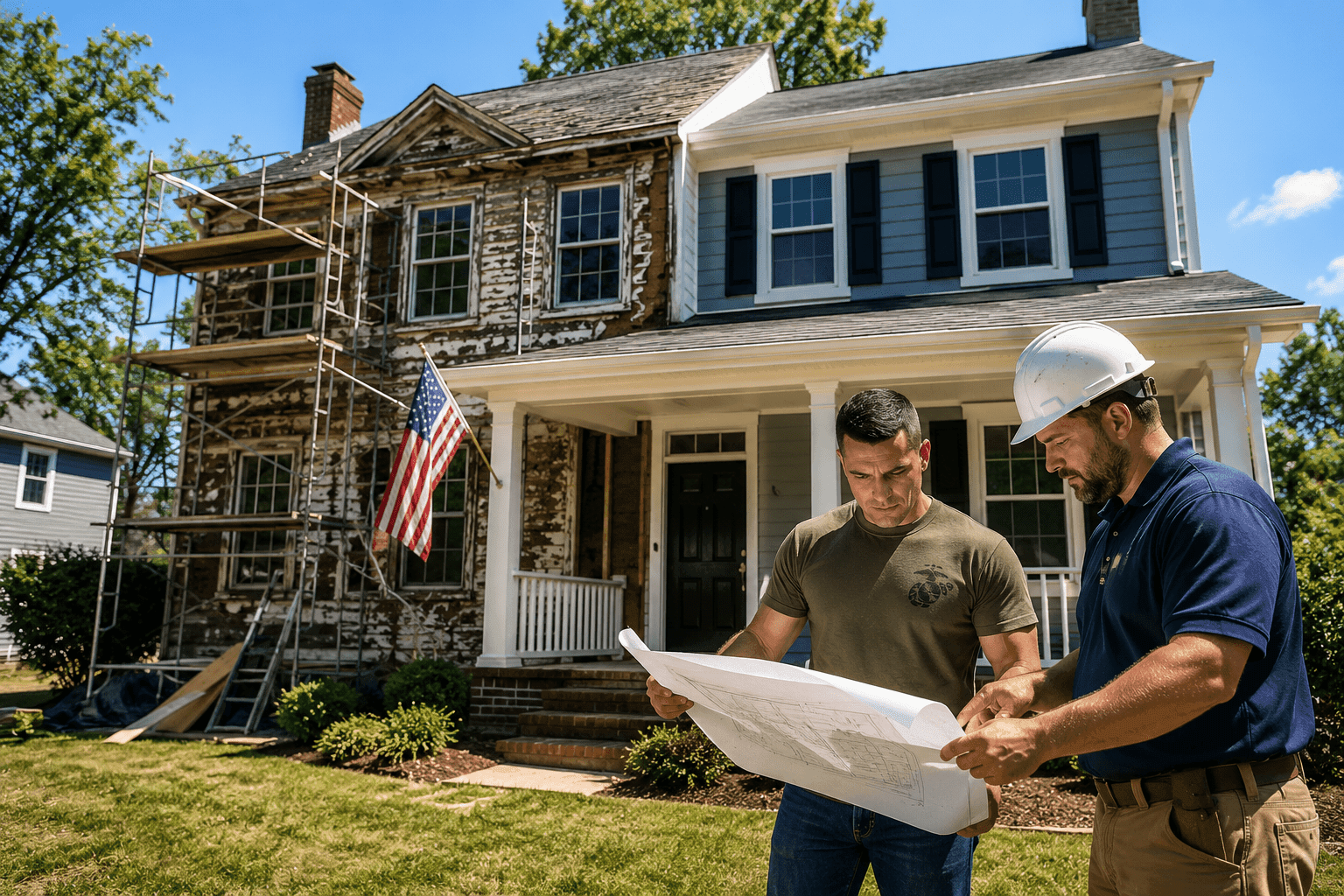
Buying a fixer-upper sounds appealing until you discover that most mortgage programs lend based on what a home is worth today, not what it will be worth after improvements. For VA-eligible buyers and homeowners, there is a financing path that addresses this problem. It carries meaningful limitations, and very few lenders offer it, but for the right borrower in the right situation it can be a genuine tool.
What Lenders Mean by a “VA Renovation Loan”
The VA does not publish a product called a “VA renovation loan.” What exists is a VA framework for loans for alteration and repair, established in VA Circular 26-18-6. Under this framework, lenders can make VA-guaranteed loans that include both the home’s purchase price (or existing loan payoff) and the cost of approved improvements, financed together in a single loan. When lenders advertise a “VA renovation loan” or “VA rehab loan,” this is what they generally mean.
The distinction matters because the program is lender-driven. The VA sets the rules, but individual lenders decide whether to participate. Finding a lender that actively offers VA alteration and repair financing is often the first and hardest step. For more on the range of financing options available to military borrowers, see Loan Options for Military Buyers.
Who Is Eligible
Eligibility follows standard VA home loan requirements. Veterans, active-duty service members, and qualifying surviving spouses who hold VA loan entitlement may be eligible. Borrowers need a valid Certificate of Eligibility (COE), sufficient income to support the combined loan, and acceptable credit. The property must be the borrower’s primary residence. VA renovation financing cannot be used for second homes, investment properties, or rental units.
How the Loan Works
The program applies to two VA loan types: a VA purchase loan and a VA cash-out refinance. In both cases, repair funds are financed into the mortgage rather than handled separately. An appraiser values the home on an as-completed basis, meaning what it will be worth after the improvements are finished. The loan amount is capped at the lesser of the total acquisition cost or the as-completed appraised value, so if the numbers do not pencil out, the borrower may need to reduce the scope of repairs or bring cash to closing.
Repair funds are held by the lender in a separate escrow account and released to the contractor in draws as work is verified and the borrower approves each disbursement. The contractor must be VA-registered, licensed, bonded, and insured per state and local requirements. Lenders may allow a contingency reserve of up to 15 percent of the repair cost to cover unexpected expenses. A VA fee appraiser conducts a final inspection before the loan guaranty is issued, confirming that all work is complete and the home meets VA Minimum Property Requirements (MPRs).
The timeline for completing repairs is not established by VA rule; it is a lender requirement. Confirm the completion deadline with your specific lender before closing. For PCS buyers on a fixed-date move, this matters more than almost anything else in the process.
What Repairs Are Eligible
Eligible improvements must be the kind ordinarily found on comparable properties in the neighborhood and must bring the home up to VA MPRs. Common examples include roofing, HVAC systems, plumbing, electrical, windows, flooring, and kitchen or bath updates that address safety, livability, or habitability. Structural repairs needed to make a home sound and safe are generally eligible as well.
Pools, detached structures, and upgrades that go beyond what comparable properties in the area support are generally not eligible. In practice, most lenders cap renovation financing at roughly $50,000 in repair costs, though this is a lender overlay rather than a VA rule. Confirm any cost ceiling directly with your lender before signing a contract.
If your goal is specifically energy efficiency, the VA offers a separate Energy Efficient Mortgage (EEM) that can add up to $6,000 in qualifying improvements to a VA purchase or refinance loan. The EEM process is simpler but the scope is narrower. The two programs serve different purposes and are not interchangeable.
Funding Fee and Additional Costs
The standard VA funding fee applies to VA renovation financing, just as it does on any VA purchase or cash-out refinance. The rate varies based on first-time versus subsequent use of VA benefits, loan type, and whether a down payment is made. Borrowers receiving VA disability compensation at a rating of 10 percent or higher are exempt, as are qualifying surviving spouses receiving Dependency and Indemnity Compensation (DIC). Because the lender manages a more complex disbursement process, an additional construction management fee may apply on top of standard origination charges. Confirm all fees before committing to a lender.
Note: VA funding fee rates can change. Confirm current rates at va.gov/housing-assistance/home-loans/funding-fee-and-closing-costs or with your lender before closing.
When This Option Makes Sense and When It Doesn’t
VA renovation financing can work well when you have found a home that needs work, comparable move-in-ready properties in the area are unavailable or priced out of reach, and you have the time the process requires. The core advantages are real: no required down payment with full entitlement, no monthly mortgage insurance, and repair costs financed at a mortgage rate rather than through personal loans or credit cards. If you are thinking about this as part of a longer-term strategy, see The Live-In Flip: A Strong Military-Friendly Investment Approach for how buying a fixer-upper can connect to broader wealth-building.
It is less likely to be the right fit if you are on a compressed PCS timeline, the project cost exceeds what most lenders will finance, or the as-completed appraisal comes in below your total acquisition costs. In those cases, alternatives worth evaluating include the FHA 203(k) loan (higher repair limits and more widely available, but requires a down payment and mortgage insurance), a conventional renovation loan, or a VA cash-out refinance of a home you already own with available equity. For more on that last option, see How to Access Home Equity Without Selling.
Before assuming this financing is available to you, confirm directly with multiple lenders whether they actively close these loans. Get contractor estimates before the appraisal is ordered, since repair costs affect the loan ceiling. And verify all current requirements with the VA and your loan officer before relying on any details, including the ones in this article, since lender overlays and program availability can shift.
The Bottom Line
VA renovation financing gives eligible borrowers a real path to buy or refinance a home that needs work without surrendering VA loan advantages. The tradeoff is complexity: fewer lenders offer it, the process is more involved than a standard VA purchase, and the as-completed appraisal creates a ceiling that limits how much you can borrow if the numbers are tight. If you are serious about this option, start by confirming which lenders in your market actively close these loans, have your contractor bids ready before the appraisal, and verify current program details at va.gov/housing-assistance/home-loans. The program is legitimate. The path to using it just takes more preparation than a standard VA purchase.
If you are evaluating this for a PCS move or a property in the Quantico corridor, reach out at pjburns@combatproperties.com. Happy to help you work through whether the numbers make sense for your situation.
This article is provided for educational purposes only and does not constitute legal, tax, financial, or lending advice. Real estate rules, rates, loan requirements, and market conditions vary by situation, location, and loan type. Before making any real estate decision, consult a licensed attorney, CPA, lender, or other qualified professional.