
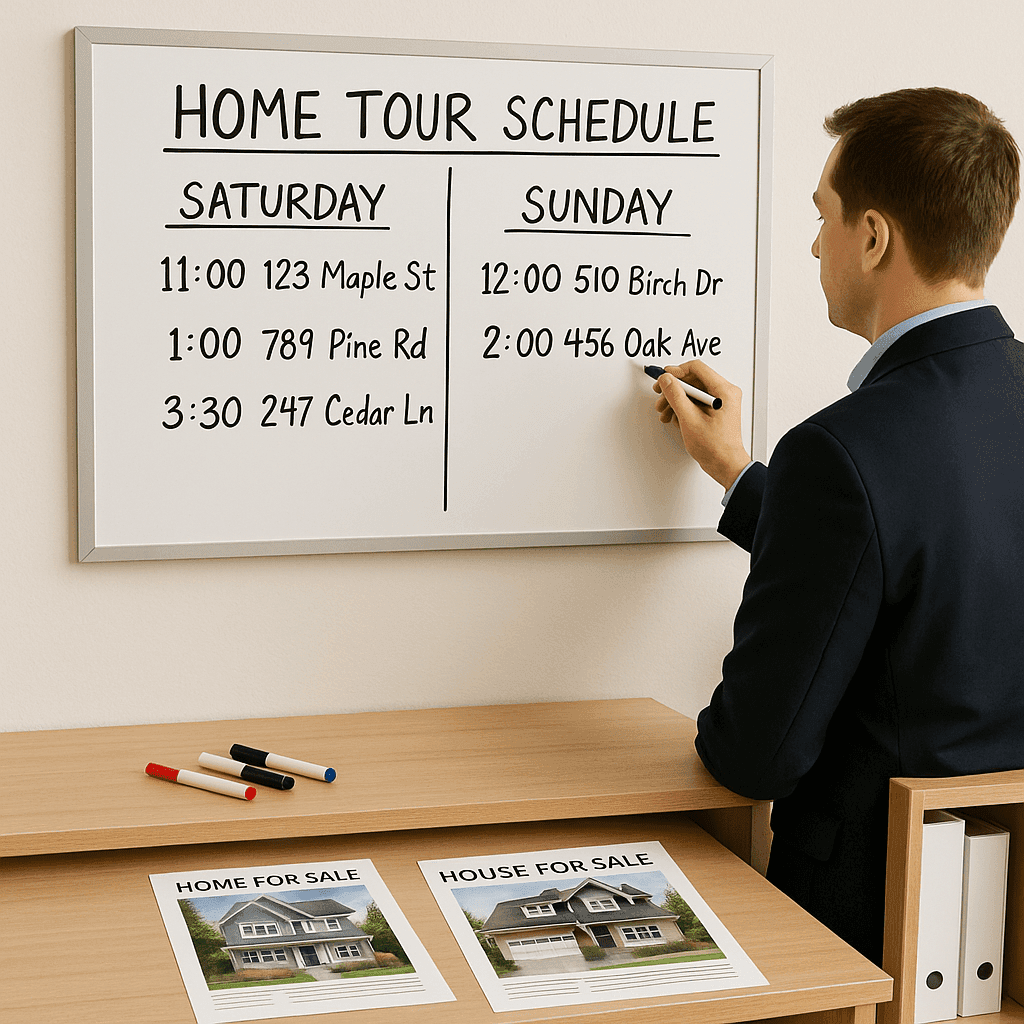
For potential buyers, home tours are usually the most exciting part of the process. You finally get to step inside the places you have been eyeing online. But before you start walking through doors, it is worth knowing how to prepare and when the timing actually makes sense.
Here is a clear look at what to expect, how to get organized, and how to avoid common mistakes so the whole experience is a lot less stressful.
Timing: When to Start Touring
If you are thinking about jumping into tours before you are pre-qualified or pre-approved, it is a good idea to hold off for now.
The touring phase comes after you have gotten your financing in motion. Ideally, you are already pre-approved. If you are not sure what the difference is between pre-qualification and pre-approval, check out this quick breakdown.
Timing matters more than people think. If you start touring before you’re financially ready, you risk falling in love with a home you can’t actually buy yet. And if you try to submit an offer with a four-month closing timeline, it tells the seller you’re not in a position to move quickly. Most sellers are trying to sell because they have somewhere else to go or something else lined up. They’re not looking to sit on a mortgage for months. The longer they have to carry those costs, the less attractive your offer becomes. You lose leverage before negotiations even start.
Home tours make the most sense in that one-to-three-month window before you want to buy. That is when your budget is set, your loan is active, and your timeline lines up with the market.
Must Haves, Nice to Haves, and the Buy Box
Before you start touring, it is important to define your buy box. That means knowing your must-haves, which are the things you absolutely need, and your nice-to-haves, which are the things you would love but are willing to compromise on.
Creating a buy box helps you stay focused and avoid wasting time on homes that are never going to work. It also saves you from burnout or confusion that can happen when everything starts to blend together. You can tweak your criteria as you go, but it helps to have a solid foundation before you start.
If you want to dig deeper into how to build a smart buy box, check out this article.
Scheduling a Home Tour: What You Should Know
Not all showings are created equal. Every home has its own access rules, and that affects how we schedule your tours.
If a home is occupied, the seller has to manually approve the showing time. These showings are by appointment only, and the approved time cannot be adjusted last minute. If we are running late or need to move the schedule around, we would have to request a new time and hope it gets approved.
If the home is vacant and listed as Go and Show, it is much more flexible. The seller sets a large window of time up front, and as long as we arrive within that range, we can go in without asking for further approval.
Each seller also sets a time limit. Some allow just 30 minutes, others give an hour or more. Your agent factors all of this in when building the schedule by checking availability, mapping drive times between homes, and putting the tour in an order that makes sense. We include buffer time so you’re not rushed, but not so early that you’re sitting in the car waiting for the next slot.
It is best to schedule multiple homes on the same day or weekend instead of spreading them out. Touring one home per day gets tedious and makes it harder on your agent’s schedule. Grouping your showings is more efficient and respectful of your realtor’s time. Remember, your agent likely has other clients and a personal life too.
Also, bring a snack and some drinks. Touring can take a few hours and we are often covering a lot of ground. Staying hydrated and fed makes a big difference.
What Happens on a Tour
Most home tours are quick. You might spend 15 to 30 minutes in each house, so expect a steady pace.
When you arrive at a showing, it will be just you and your realtor. The seller and their agent will not be there. This gives you the freedom to explore and speak honestly, but keep in mind that many homes now have smart devices with cameras or microphones. Be mindful of what you say inside the home or near the front door.
While touring, look beyond surface-level finishes. Pay attention to layout, natural light, storage, room sizes, and how the home feels overall. Meanwhile, your agent will be reviewing disclosures, checking comparables, watching for red flags, and thinking about strategy in case you want to make an offer.
Virtual tours can absolutely help, especially if you are stationed out of state, too busy to make the trip, or cannot be in town. While it is not quite the same as being there in person, virtual is still better than nothing. If you are able to fly in for a full weekend of tours, even better. But if not, your agent can walk you through homes using video calls, recorded walkthroughs, and their own local knowledge.
One important note: You can take photos of the outside of the home to help you remember it. But please do not take photos or videos inside. Even if the home is vacant, it is still private property and we need to respect that.
How to Stay Organized
Once the day is rolling and you are seeing homes back-to-back, it is easy to forget which one had the vaulted ceilings and which one had the weird smell. Staying organized helps a lot.
Here is what works best:
- Take notes right after, or during, each showing. It only takes a few seconds to jot down what you liked and what you did not.
- Label the homes in a way that sticks. Instead of saying house number four, say something like the one with the blue door or the one with the huge backyard.
- Use a simple rating system. Giving each home a score from one to five helps you rank them later.
- Snap a few exterior photos if it helps jog your memory, but remember, no interior shots.
When the dust settles after a long day of tours, those quick notes and labels will make a huge difference.
After the Tours: What’s Next?
After you have seen a few homes, it is time to sit down and review what you saw.
If one of them stands out, we can schedule a second showing or submit an offer. Seeing a home again often reveals things you did not notice the first time around.
If you think you are ready to write an offer, check it against your buy box. Does it hit your must-haves? Can you live without the things it is missing? If so, we are probably close.
If you are not quite there yet, that is totally fine. You can keep searching, keep refining your list, and keep getting more clarity on what works and what does not.
Final Thoughts
Touring homes is not just about checking off boxes. It is about figuring out what matters to you.
When you are prepared with your financing, a solid buy box, a realistic schedule, and a plan for staying organized, the process is way less overwhelming.
You do not need to see every home on the market. You just need to see the right ones, with purpose.