
The first 90 days in a new home are mostly about administrative tasks and getting your bearings. What comes after that is a different kind of work, keeping the house itself in good shape for as long as you own it. Most of that work is small, predictable, and cheap when it’s done on schedule. It gets expensive fast when it isn’t. Here’s how to build a maintenance rhythm instead of reacting to problems as they show up.
Why a Maintenance Plan Beats a Move-In Checklist
A move-in checklist gets done once. A maintenance plan is something you come back to every few months for as long as you own the home. Most of the expensive repairs homeowners face, a failed water heater, a dying HVAC system, water damage from clogged gutters, are rarely sudden. They’re the result of a small, cheap task that never got done. A simple recurring calendar catches most of that before it becomes a repair bill.
Building Your Year-Round Maintenance Calendar
You don’t need a complicated system. Tying tasks to the seasons is usually enough to keep them from slipping.
Spring
- Schedule your HVAC system’s cooling tune-up before the first hot week hits, since technicians book up fast once summer arrives.
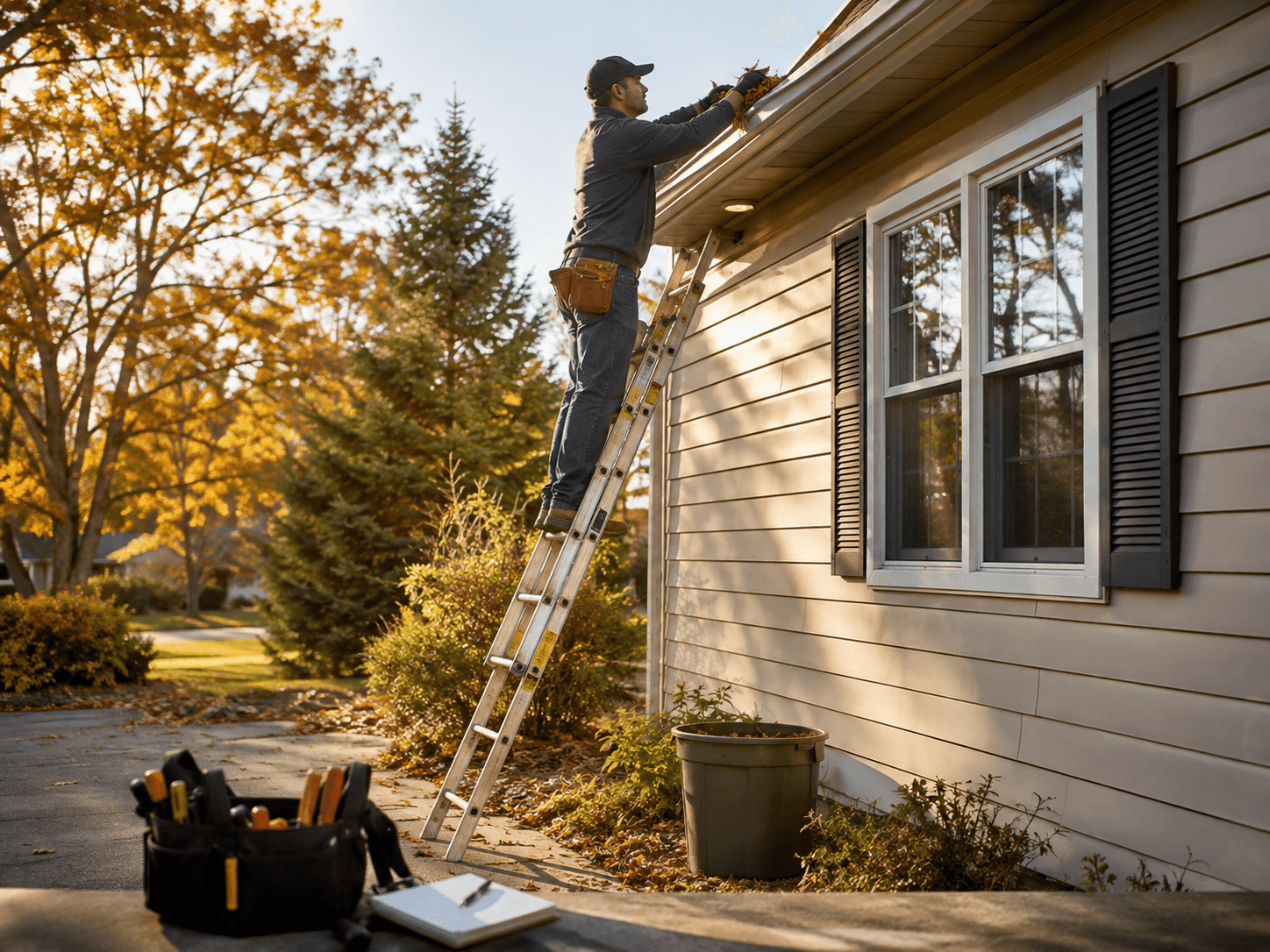
- Clean gutters and downspouts of winter debris and check that water is draining away from the foundation, not pooling next to it.
- Inspect the roof for any shingles or flashing that shifted over the winter, either from the ground with binoculars or with a professional if the roof is hard to see.
- Test outdoor spigots and irrigation lines for leaks now that they’re back in regular use.
Summer
- Replace HVAC filters on whatever schedule your system calls for, typically every one to three months during heavy use.
- Check caulking around windows and doors for gaps that let conditioned air escape and drive up cooling costs.
- Walk the exterior for peeling paint, cracked siding, or deck boards that need attention before weather makes it worse.
Fall
- Schedule the HVAC system’s heating tune-up before the first cold snap, mirroring the spring cooling service.
- Clean gutters again once most leaves have dropped, and confirm downspout extensions are directing water well away from the house.
- Test smoke and carbon monoxide detector batteries, a task that pairs naturally with the fall time change.
- Disconnect and drain garden hoses and shut off exterior spigots before the first hard freeze.
Winter
- Keep an eye on attic insulation and any exposed pipes in crawlspaces or garages during hard freezes, since burst pipes are one of the more expensive surprises a winter can bring.
- Check the dryer vent for lint buildup, a fire risk that’s easy to forget and worth clearing at least once a year.
- Use the slower season to plan any bigger projects, roof replacement, exterior painting, driveway work, for when the weather turns in spring.
The Big-Ticket Items Worth Tracking Separately
Beyond the seasonal rhythm, a few systems are worth their own simple log: the installation date of your water heater, the age and last service date of your HVAC system, and the approximate age of your roof. A note in your phone or a folder of receipts is enough. What matters is knowing these numbers before something fails, since replacing a water heater on your own timeline beats replacing one after it’s already flooded a closet. It’s also exactly what buyers and appraisers ask about if you sell down the road.
Systems That Need Extra Attention in This Region
A few things come up more often in this part of Virginia than elsewhere. If you’re on well and septic, both systems need their own maintenance schedule separate from everything above, and skipping it tends to be far more expensive than the service itself. Clay-heavy soil in parts of this area holds water longer than sandier soil elsewhere, which makes proper grading and gutter drainage more important here than elsewhere. Crawlspaces are also worth a periodic look for humidity or standing water, since excess moisture there can lead to mold or wood rot long before it’s visible anywhere else in the house.
Building the Habit Without Burning Out
The plan only works if it’s realistic. Trying to do everything on one weekend twice a year usually means it doesn’t happen at all. A better approach is picking one or two tasks a month and setting a recurring reminder, spreading the work out so no single weekend feels like a second job. If a home warranty covers some of these systems, factor that in too, since a covered repair may mean a phone call instead of a project.
Note: If you’re weighing whether ongoing maintenance costs make more sense to offset with a home warranty, that’s a separate decision worth comparing against your homeowners insurance coverage.
Putting It All Together
A maintenance plan isn’t about turning yourself into a full-time property manager for your own house. It’s a handful of predictable tasks, tied to the seasons, that catch small problems while they’re still cheap to fix. Build the habit in your first year and it stops feeling like a project and starts feeling like background noise, which is exactly what it should be.
If you’re settling into a new home and want a second opinion on what to prioritize, reach out and we’re happy to talk through it.
This article is provided for educational purposes only and does not constitute legal, tax, financial, or lending advice. Real estate rules, rates, loan requirements, and market conditions vary by situation, location, and loan type. Before making any real estate decision, consult a licensed attorney, CPA, lender, or other qualified professional.