
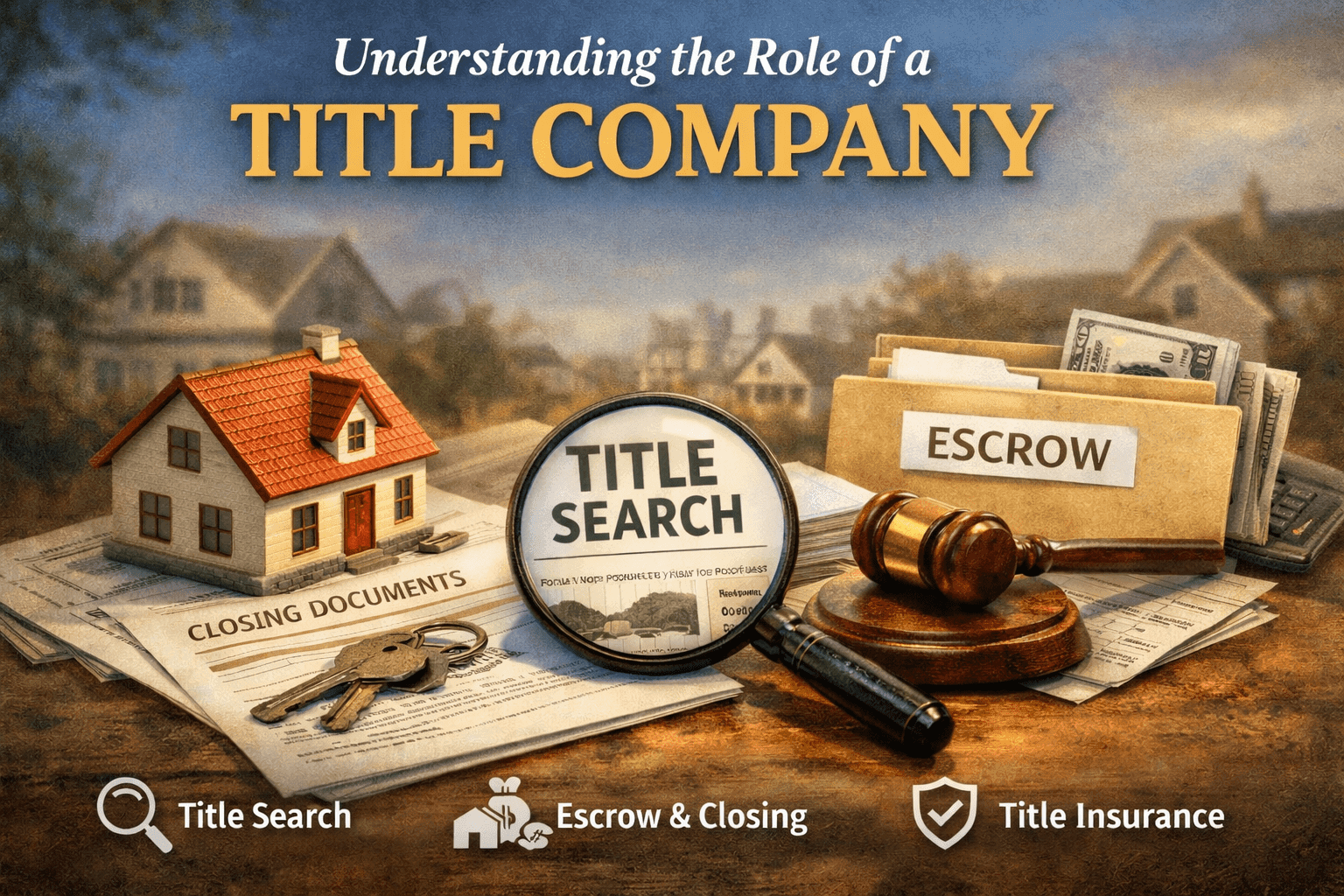
The Role of a Title Company in a Home Sale or Purchase
Whether you are buying or selling a home, a title company plays a critical behind-the-scenes role in making sure the transaction is legally sound and financially secure. While title companies are often discussed from the buyer’s perspective, their work is just as important for sellers, helping ensure ownership is transferred correctly and sale proceeds are handled properly.
Understanding what a title company does and how to choose one can help both sides of a transaction avoid delays, confusion, and last-minute surprises.
What Is a Title Company?
A title company is a neutral third party that helps facilitate a real estate transaction by researching property ownership, identifying potential legal issues, managing funds, and finalizing the transfer of ownership. The title company does not represent either the buyer or the seller and does not provide legal advice. Instead, it acts as the settlement agent responsible for making sure the transaction is completed correctly and in accordance with the contract, local laws, and lender requirements.
Title companies are involved in most real estate transactions because they reduce risk for everyone involved. By confirming ownership, clearing issues, and documenting the transfer, they help protect buyers, sellers, and lenders from future disputes.
In simple terms, a title company makes sure:
- The property can legally be sold
- Ownership is transferred correctly
- Money is collected and distributed properly at closing
How a Title Company Differs from a Real Estate Attorney
A title company and a real estate attorney serve different functions in a real estate transaction, and one does not replace the other.
A title company handles the logistics and execution of closing. This includes researching the property’s ownership history, issuing title insurance, preparing settlement documents, holding and disbursing funds, and recording the transfer of ownership. The title company is neutral and does not advocate for either party.
A real estate attorney, on the other hand, represents one party’s legal interests, either the buyer or the seller. An attorney may review the contract, explain legal obligations, and provide legal advice tailored to their client’s situation. In Virginia, an attorney does not conduct the settlement or replace the title company. Instead, an attorney works alongside the title company if a buyer or seller wants additional legal review.
What Does a Title Company Do During a Home Purchase or Sale?
One of the first things a title company does after a contract is accepted is conduct a title search. This involves reviewing public records to confirm the current legal owner and to identify any issues that could affect the transaction. These issues might include unpaid mortgages, tax liens, judgments, easements, or recording errors from prior transfers.
For sellers, this process helps bring to light any problems that must be resolved before closing. For buyers, it provides reassurance that they will receive clear ownership without inheriting someone else’s issues. Addressing these matters early helps prevent closing delays.
Once the title search is complete, the title company issues title insurance. Title insurance protects against certain undiscovered title defects that may arise after closing, such as unknown heirs or mistakes in public records.
- Lender’s title insurance is required when a mortgage is involved and protects the lender’s interest.
- Owner’s title insurance protects the property owner and remains in effect for as long as they own the home.
The title company also manages escrow, meaning it securely holds and distributes funds related to the transaction. This includes earnest money, loan funds, and sale proceeds. By acting as a neutral holder of funds, the title company ensures all financial obligations are paid correctly. Escrow protects both buyer and seller by ensuring funds are not released until all contractual conditions are met.
What Does a Title Company Do at Closing?
As closing approaches, the title company coordinates with all parties involved to prepare final documents and confirm financial details. This typically includes preparing the settlement statement, confirming final dollar figures with lenders and real estate agents, and facilitating the signing of closing documents.
After closing, the title company records the deed and other required documents with the local government, officially completing the transfer of ownership and creating a public record of the transaction.
Who Chooses the Title Company, and When?
How the title company is selected depends on state law and local practice.
In Virginia, the buyer has the right to select the title company. This selection is usually made before or when an offer is submitted, because the buyer must name the title company in the contract. This requirement, allows work to begin immediately once a contract is accepted and helps prevent unnecessary delays, especially if title issues need time to be resolved.
Once chosen, the title company serves as the settlement agent for the entire transaction, handling the title search, preparing closing documents, collecting and disbursing funds, and issuing the required title insurance policies.
What to Look for When Selecting a Title Company
Not all title companies operate the same way, and the differences often become most noticeable as closing approaches. Organization, communication, and transparency around fees are the factors that tend to make the biggest difference in the overall experience.
First, strong organization and communication are essential. A well-run title company keeps the transaction moving by staying ahead of deadlines, coordinating efficiently with lenders and real estate agents, and promptly addressing questions or issues as they arise. Clear explanations of each step in the process help buyers and sellers understand what to expect, which is especially important when timelines are tight or unexpected title issues come up.
Second, understanding fees upfront is just as important. Title fees vary based on location, purchase price, and lender requirements, but they commonly include the cost of the title search, title insurance premiums, settlement or closing fees, recording fees, and administrative charges. In Virginia, many of these costs are customarily paid by the buyer, though who pays what is ultimately determined by the contract.
A reliable title company should be willing to explain its fees clearly, outline them early in the process, and answer questions before closing documents are finalized. Buyers and sellers should review the settlement statement carefully and ask for clarification if anything is unclear. Having a clear understanding of title fees ahead of time helps avoid surprises at closing and allows everyone involved to proceed with confidence.
The Bottom Line on What a Title Company Does
A title company ensures that a real estate transaction is legally sound, financially secure, and properly documented. By verifying ownership, identifying and resolving title issues, managing escrow funds, issuing title insurance, and recording the final deed, the title company protects everyone involved in the transaction.
Whether you are buying or selling, selecting a title company early and understanding its role helps create a smoother, more predictable closing experience. Asking questions upfront and working with a reputable title company can make a meaningful difference from contract to closing.